A painting company that had grown into remodeling.
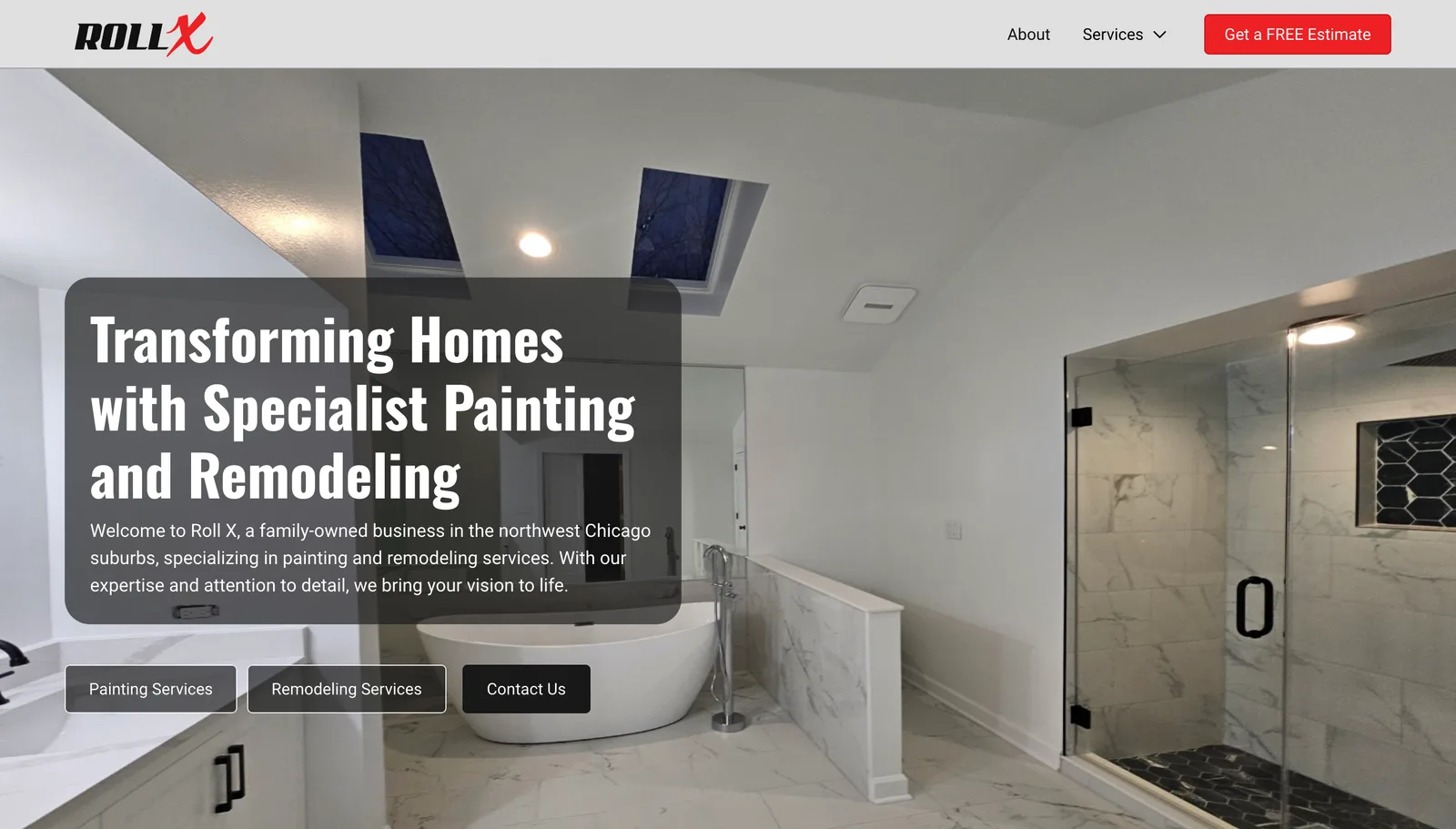
Roll X
A painting company that grew into renovations and remodeling, and needed a site that could carry all of it without looking like it did none of it well. The information architecture was the brand decision.
- 8
- Services
- 5 months
- Brief to live
- None
- Rebuilds since
Painting through kitchens, baths, and basements
February to July 2024, designed and shipped solo
Insurance restoration added as its own department
Act 01
Problem
A business that does eight things has to prove it does each one well.
Client
A friend’s painting venture that kept growing, and my first real small-business client.
Roll X started as interior and exterior painting, then grew into renovations and remodeling. Kitchens, bathrooms, basements.
The problem
Customers assume a company is only truly good at one thing and merely dabbles in the rest. Roll X did eight things, and the highest-value job on the list was the one most exposed to that doubt.
The idea
Make the eight services read as eight specialists, not one generalist.
Position Roll X as an umbrella brand with named, specialized departments. Each service its own titled specialty under one roof, like divisions of a larger company.
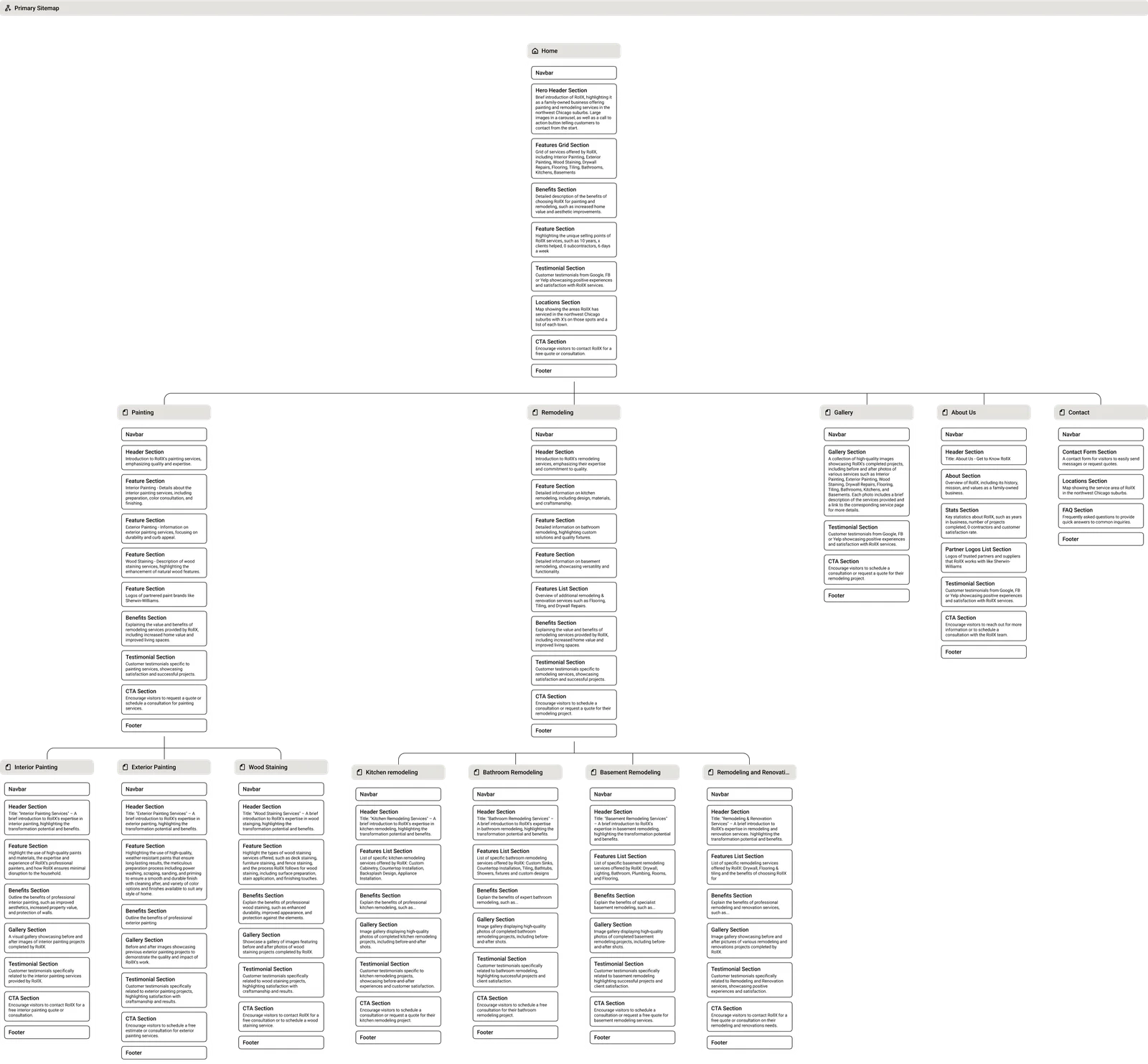
The information architecture was the brand decision. Eight services, eight departments, one roof.
Act 02
Build
The conversion event is a phone call from someone standing in the room.
Who decides
Everyone local competed on price. Nobody competed on trust.
What the market sold
Price first: quotes, discounts, and comparison shopping, on the assumption the objection is is this affordable.
What Roll X sells
Credentials, named departments, and proof of work before pricing on every page, because the real objection is will these people finish what they start.
The customer for a remodel is a homeowner who’s been burned before, someone who has to believe the contractor before they’ll ask what it costs. That reordered every page.
Structure to shipped
One person, brief to deployment, no handoff.
- 1
Relume
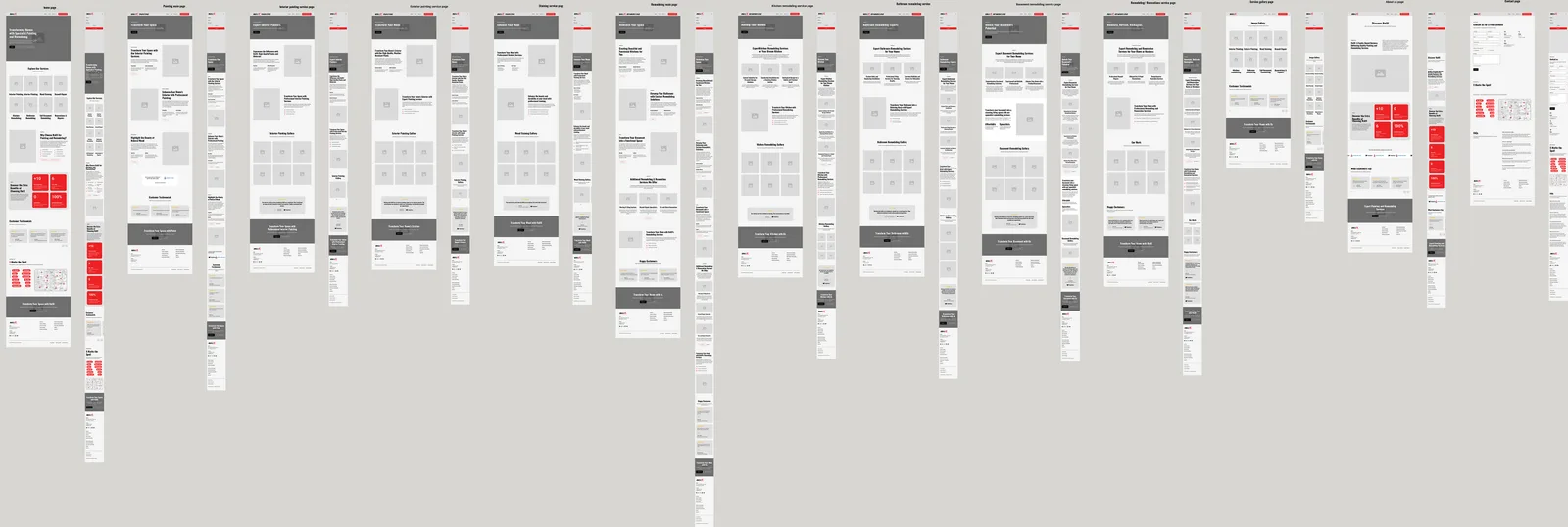
First wireframe pass off the sitemap, then edited for flow.
- 2
Figma
Lo-fi with minimal color to settle hierarchy before styling.
- 3
Framer
Where the lo-fi became the live, deployed site.
The sitemap set the department structure and I built straight through it. No spec doc, no dev handoff, no translation loss.
Act 03
Shipped
Deployed in 2024, then extended two years later into insurance restoration.
Brand expansion
The client arrived with a logo. They left with a system that holds up past the lockup.
Black and red, extended into a usable range of grays with clear rules. The brand carried across the site and its marketing, not just a single mark.
Red
#ED2024
Ink
#141414
Steel
#8A9099
Paper
#FFFFFF


Marketing
Flyers and ads the client could run as-is, in the same system.


Live & mobile
On a phone, calling the owner is one tap from anywhere on the site.
Shipped in Framer with a full mobile layout. A top bar puts call and inquiry one tap away, wired straight to the owner’s cell. I set up the domain and hosting too, and learned a few things fighting the registrar’s email setup.

Expansion
Two years on, a whole new business line dropped into the architecture without a rebuild.
Roll X moved into insurance restoration: water and flood, storm, mold, sewage, and the rebuild after. The umbrella structure was built for exactly this: the new line got its own named department with its own page, rather than five more bullets appended to a services list.
Two readers
The restoration page is written for two people, and only one of them is the customer.
The homeowner
Water in the basement, deciding who to call in the next hour, not collecting three quotes. The page opens on we handle the damage and the insurance paperwork, then a one-hour response window, then the eight steps from emergency call to final repair.
The adjuster
Never named in the copy, but shapes half of it. Carriers vet contractors on documentation, so the page surfaces the IRI certification with its license number and a verification link, licensed-bonded-insured in plain text, and Xactimate estimates in the format carriers already work in.
Naming the software an adjuster uses is a credential aimed at a reader the homeowner will never be. That was the whole job on this line: make a family painting business legible as a restoration contractor to the people who decide whether it gets the work.
What I'd refine
Stock photography was the cost of shipping in five months.
The brief came with hard constraints, a simple build and a short palette, on a timeline shorter than a photo shoot needs. Most of the imagery is stock.
Given another pass: photography of their own projects, tighter consistency across the service pages, and the conversion tracking the site was built to carry.
Close
The first site I built that a stranger could visit.
It’s live, it’s the client’s, and it was my first lesson in what shipping for someone else really costs: in scope, in constraints, and in pricing.